
Math Fact Fluency
100 Multiplication Facts Practice: Daily Drill Plan for Grades 3-5
A 100 multiplication facts page is useful only when the learner is ready for mixed review. For grades 3-5, build from smaller fact families, correct errors the same day, and use the full 100-fact page as a progress check instead of the first teaching step.

Key takeaways
- Use 100-fact pages for mixed review after accuracy is steady in smaller fact families.
- Track missed facts, not just time, so practice does not become repeated guessing.
- Split the page into halves when a full 100 facts creates rushing or shutdown.
- Choose a workbook sequence when loose printable pages are hard to repeat consistently.
Who this guide is for
This guide is for parents, teachers, tutors, and homeschool families choosing a daily multiplication routine for a grades 3-5 learner. It is especially useful when the child knows the meaning of multiplication but still pauses on facts, mixes up products, or needs more consistent review before division and multi-step math.
This is practical educational support, not a diagnostic tool or a guaranteed outcome. If a child freezes, panics, or cannot explain what multiplication means, start with smaller untimed practice and ask the child’s teacher what support fits the class sequence.
The parent or teacher decision
The practical decision is whether the learner needs full mixed 100-fact review today or a smaller fact-family step first. A full page can build stamina and fluency, but it can also hide the real problem if the child misses the same 7s, 8s, or 9s every time.
| What you see | Best next page | What to track |
|---|---|---|
| Most 0s, 1s, 2s, 5s, and 10s are quick, but 6s-9s are slow | Small fact-family sets before the full 100 facts page | Which family causes the miss |
| Facts are mostly correct but the child runs out of time | Half of a 100-fact page, then build stamina | Correct answers per minute without rushing |
| The child guesses when the timer starts | Untimed mixed review with immediate correction | Accuracy and calm completion |
| Multiplication is steady and division is starting in class | Full 100 multiplication facts, then related division families | Fact pairs such as 7 x 8 and 56 / 7 |
What counts as a 100 multiplication facts page?
A 100 multiplication facts page usually means 100 problems covering multiplication facts from 0-12 or a similar range. Some pages are fully mixed. Others repeat selected fact families. For most learners, selected families should come before fully mixed pages because they make error patterns easier to see.
Do not assume “100 facts” automatically means a one-minute race. The number of facts, the fact range, the time goal, and the correction routine are separate choices. A careful 10-minute session can be more useful than a fast page that never gets corrected.
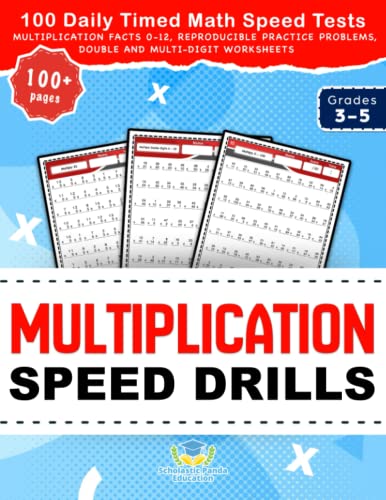
Multiplication Speed Drills
Multiplication Speed Drills is a fit when a grades 3-5 learner needs repeatable 0-12 multiplication practice, fact-family review, and structured pages instead of scattered printables.
How to approach 100 multiplication facts
Start by deciding the fact range. If the learner is still building confidence, use 0-5, 0-10, or one difficult family before using a full 0-12 page. If the learner already knows most facts, use the 100-fact page as mixed review and look for repeated misses.
Then decide whether the session is a practice page or a progress check. Practice pages can be untimed or lightly timed. Progress checks can use a consistent time goal so the adult can compare accuracy and pace across weeks.
A 15-minute daily drill plan
Use this rhythm when you want 100 multiplication facts practice without turning it into a pressure event. Keep the steps predictable so the child knows what will happen before the timer appears.
- Preview for two minutes. Name one target family, such as 7s or 8s, and read three related facts out loud.
- Practice one small set. Complete a short warm-up row before the full 100-fact page or half page.
- Complete the page. Use a generous time goal. If the child rushes, cover half the page and complete 50 facts instead.
- Correct immediately. Write each missed fact beside its related fact, such as 8 x 7 = 56 and 7 x 8 = 56.
- Choose tomorrow’s target. Repeat the missed family before adding a harder mixed page.
A practical routine
| Step | What to do | Why it helps |
|---|---|---|
| Monday | Review 2s, 5s, 10s, and one trouble family. | Anchor facts make mixed review less overwhelming. |
| Tuesday | Complete 50-100 mixed facts with a generous time goal. | The adult gets a clean accuracy snapshot. |
| Wednesday | Repeat only missed families from Tuesday. | Correction becomes practice, not just grading. |
| Thursday | Complete another mixed page and compare accuracy. | The learner sees progress without changing everything. |
| Friday | Review multiplication-to-division fact pairs. | This prepares the child for division timed tests. |
What to look for in a good 100-facts resource
A good 100 multiplication facts resource should make the next step obvious. Look for readable spacing, a predictable fact range, enough repetition, and a way to move from fact-family practice to full mixed review. If the page is too dense, the child may make handwriting or tracking errors that look like math errors.
A workbook is useful when you want the sequence already organized. Loose printables can work for occasional review, but a bound routine is easier to repeat when you need daily practice, error tracking, and a clear path from multiplication toward division.
How to choose the right difficulty level
The right level for 100 multiplication facts is challenging but still finishable. If every row requires adult rescue, the level is too high. If the learner finishes quickly but misses signs, skips rows, or guesses through hard facts, the page needs a slower correction routine.
A good first session should feel easier than the adult expects. Once the learner can complete a short section with calm focus and mostly accurate answers, increase the number of facts, mix more families, or add a consistent time goal.
Common mistakes to avoid
- Starting with too much work before the routine feels stable.
- Changing resources every few days before the learner has time to improve.
- Measuring only speed or page count instead of accuracy, missed families, and calm completion.
- Using a full mixed page when one fact family needs targeted review.
- Saving corrections for later, when the child no longer remembers the thinking mistake.
Signs the routine is working
Progress is not always dramatic at first. Look for smaller signals: fewer blank pauses, fewer repeated misses, calmer starts, better row tracking, more accurate corrections, and a child who can name the facts that still need practice.
If accuracy rises before speed does, the routine is still doing useful work. If speed rises while mistakes increase, slow down and return to fact-family correction.
Questions to ask before choosing the next page
- Which fact family caused the most missed answers?
- Did the timer improve focus or create rushing?
- Should tomorrow be 50 facts, 100 facts, or a single-family review page?
- Is the child ready to connect multiplication facts to division facts?
- Would a workbook sequence be easier to maintain than another printable?
How to use this guide next
If the learner needs multiplication recall, start with Multiplication Timed Tests: How to Use Them Without Math Anxiety and the Multiplication Speed Drills workbook. If multiplication is mostly steady and division is the next class target, move to Division Timed Tests: Building Accuracy Before Speed.
If you are choosing among several books, use Best Math Fact Fluency Workbooks for Grades 3-5 to decide whether the better next step is multiplication, division, or mixed-operation review.
FAQ
What is the best first step for 100 multiplication facts?
Start with smaller fact-family practice, then use the full 100-fact page when the child can complete most facts accurately without guessing.
How often should kids practice multiplication facts?
Three to five short sessions per week usually works better than one long session, especially when missed facts are corrected the same day.
Should a 100 multiplication facts page be timed?
It can be timed after accuracy is steady, but timing should be removed or relaxed if it causes rushing, guessing, or shutdown.
What should kids know before division timed tests?
They should know the related multiplication facts well enough to connect facts such as 8 x 7 = 56 with 56 / 7 = 8.