
Math Fact Fluency
Math Facts vs Math Fluency: What Parents Should Practice First
Math facts are the individual answers a child recalls, such as 7 x 8 = 56. Math fluency is the larger ability to use facts accurately, flexibly, and without so much effort that the rest of the problem falls apart.

Key takeaways
- Math facts are single recall targets; math fluency includes accuracy, speed, strategy, and flexible use.
- In grades 3-5, weak multiplication facts often block division, fractions, multi-step problems, and homework stamina.
- Timed tests should check readiness, not replace teaching, modeling, or correction.
- A workbook is most useful when it matches the child’s current bottleneck: recall, division, mixed review, or confidence.
Who this guide is for
This guide is for parents, classroom teachers, tutors, and homeschool families deciding what to practice during a short daily math block. It is especially useful for grades 3-5 learners who can understand multiplication and division lessons but still lose time and confidence on basic facts.
This is practical educational support, not a diagnostic guide. If a child has persistent distress, avoids math completely, or struggles with number meaning even after direct instruction, use this page as a routine-planning tool and ask the child’s teacher or a qualified learning professional for individualized guidance.
The real decision: recall problem or fluency problem?
The parent or teacher decision is not simply whether facts matter. The better question is: what kind of practice would make tomorrow’s math easier?
| What you see | Likely need | What to practice first |
|---|---|---|
| Counts by fingers or skip-counts for most facts | Fact recall is not automatic | Small multiplication fact-family sets |
| Knows multiplication but freezes on 56 / 7 | Division facts need connection to multiplication | Division accuracy before speed |
| Can answer facts but mixes signs in review | Operation switching is the bottleneck | Mixed multiplication and division pages |
| Gets facts right in isolation but loses track in word problems | Broader fluency and problem reading | Short word problems with known facts |
| Rushes timed pages and makes avoidable mistakes | Pacing and confidence need support | Untimed review, immediate correction, then gentle timing |
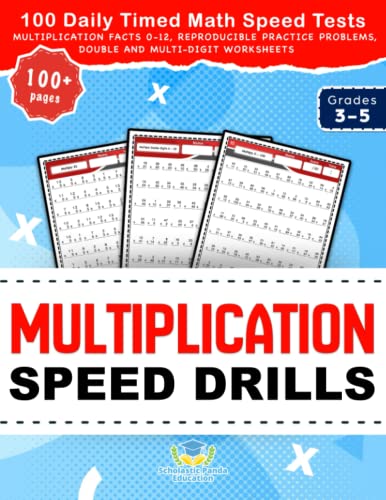
Multiplication Speed Drills
Use Multiplication Speed Drills when a grades 3-5 learner needs repeated 0-12 multiplication practice before division, mixed review, or longer problem solving can feel smooth.
What math facts are
Math facts are basic number combinations children eventually recall without solving from scratch every time. For the Scholastic Panda math fact cluster, the main examples are multiplication facts from 0-12, related division facts, and the addition and subtraction facts younger learners use before multiplication.
Fact practice is narrow by design. A child may spend a session on 6s and 7s, related turnarounds such as 7 x 6 and 6 x 7, or a short group of division facts that all connect to one multiplication family. The goal is to reduce the mental load of recall so the child has more attention available for the rest of math.
What math fluency is
Math fluency is wider than memorization. A fluent learner can get accurate answers, choose a sensible strategy, notice patterns, recover from a mistake, and use facts inside longer work. Speed can be one signal of fluency, but speed alone is not the whole target.
For example, a child may know that 8 x 7 = 56 but still need fluency work if they cannot use that fact to solve 56 / 8, estimate a multi-step word problem, or notice that 8 x 70 is ten times larger. That child does not need only another stack of random facts; they need guided practice connecting known facts to new tasks.
Why facts usually come before fluency
In grades 3-5, multiplication recall is often the first bottleneck because it supports division, fractions, area, factors, multiples, and multi-digit multiplication. If every multiplication fact requires skip-counting, the child may understand the lesson but run out of working memory before the problem is finished.
That does not mean every session should be a race. It means fact recall should be practiced in small, clear sets until accuracy becomes steadier. Then the adult can widen the routine into division, mixed operations, and word problems.
A 12-minute routine that separates facts from fluency
- Minute 1: choose the target. Pick one fact family, one related division set, or one mixed review page. Do not combine all three at the start.
- Minutes 2-3: preview patterns. Say the anchor facts out loud. For multiplication, connect turnarounds such as 6 x 8 and 8 x 6.
- Minutes 4-8: practice the page. Keep it short enough that the child can finish with attention still available for correction.
- Minutes 9-10: correct immediately. Circle missed facts, write the related fact beside each miss, and say the corrected answer once.
- Minutes 11-12: decide tomorrow’s lane. Repeat the same family, move to related division, or widen to mixed review only if accuracy is steady.
When to add timed tests
Timed tests belong after the child understands the fact set and can complete part of it accurately. They are useful as a quick check: can the child recall known facts more smoothly than last week? They are not useful when the timer causes guessing, random answers, tears, or shutdown.
If timing helps focus, keep it brief and private. If timing hurts accuracy, turn the timer face down or remove it for a week. The practice target can stay the same while the pressure changes.
How to choose the right workbook path
Use the child’s current bottleneck, not just the grade printed on the cover.
- Choose multiplication speed drills when the child still pauses on 0-12 multiplication facts.
- Choose division timed tests when multiplication is mostly familiar but division recall is slow or inconsistent.
- Choose mixed multiplication and division when each operation is accurate alone but sign switching causes mistakes.
- Choose gentler number-sense support when the child cannot explain what the operations mean or misses many facts even without a timer.
Practical examples
Example 1: Third grader who knows 2s, 5s, and 10s. Start with 3s and 4s, then add one harder family at a time. A full 100-fact page is probably too broad for the first week.
Example 2: Fourth grader who knows multiplication but misses division. Use division pages tied to familiar multiplication facts. Say “56 divided by 7 asks what times 7 makes 56” before timing.
Example 3: Fifth grader who gets facts right but homework takes forever. Use mixed review and short word problems. The issue may be fluency, pacing, or operation choice rather than pure memorization.
Common mistakes to avoid
- Using full mixed pages before smaller fact families are accurate.
- Lowering the time goal when mistakes are increasing.
- Skipping correction and simply assigning another page.
- Treating fast guessing as better than slower accurate recall.
- Using a workbook as the only support when the child needs direct instruction or accommodations.
FAQ
What is the difference between math facts and math fluency?
Math facts are individual answers a child recalls. Math fluency is the ability to use facts accurately, efficiently, and flexibly in wider math work.
Should my child memorize facts or understand strategies first?
Children need both. Use models and strategies to build meaning, then repeat small fact sets until recall becomes easier.
Are timed tests good for math fluency?
Timed tests can be helpful after accuracy is steady. They should be removed or relaxed when they cause rushing, guessing, or shutdown.
What should parents practice first in grades 3-5?
Start with multiplication recall if basic facts are slow. Move to division, mixed review, and word problems after the child can answer smaller sets accurately.