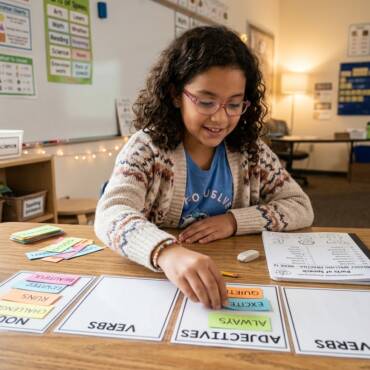
Spelling and Phonics
Building Spelling Skills Grade 4: What to Practice Weekly
If you are trying to build spelling skills in 4th grade, the main question is not how many words to assign. It is which patterns to review this week, how to practice them without overload, and when to connect spelling to vocabulary and sentence writing. A weekly plan works better than random review because it gives kids the repetition they need without making every day feel brand new.
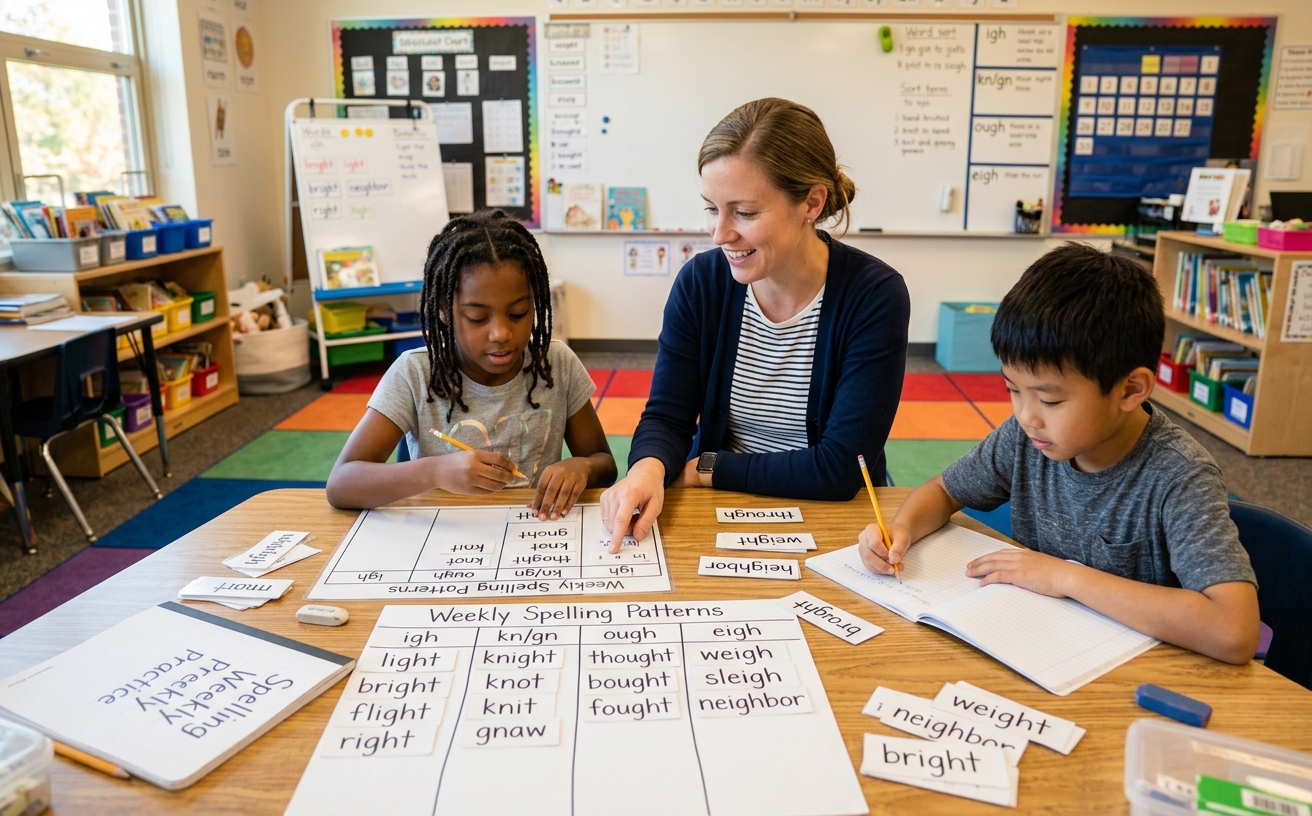
Key takeaways
- Grade 4 spelling improves faster when weekly practice is organized by pattern, not only by word list length.
- Short daily review beats occasional long catch-up sessions.
- Students need to write the words in sentences, not only copy or test them.
- A workbook should support a practical routine and a clear next step to a book or guide when more structure is needed.
What parents and teachers are usually trying to solve
Searches for building spelling skills grade 4 usually come from one of four situations: weekly spelling homework is inconsistent, test scores are fine but transfer to writing is weak, phonics gaps are still showing up in longer words, or the learner resists spelling because sessions feel repetitive and unclear.
Those situations need different responses, but they all improve when weekly practice is narrow, predictable, and connected to real word use. The goal is not to make a child do more spelling. The goal is to make the right kind of spelling practice easier to repeat.
What to practice in 4th grade spelling
By 4th grade, strong spelling work usually includes patterns that show up across reading, vocabulary, and writing assignments. A useful weekly plan often rotates through these targets:
- Prefixes and suffixes: re-, un-, dis-, pre-, -ful, -less, -tion, -ment.
- Multisyllable decoding and spelling: breaking longer words into parts before writing.
- Vowel teams and less common vowel patterns: especially when students still confuse similar sounds.
- Homophones and commonly confused words: words that are spelled differently but sound alike.
- Sentence application: using new words in writing so spelling supports meaning.
You do not need to cover every target every week. One focused target plus sentence use is usually enough.
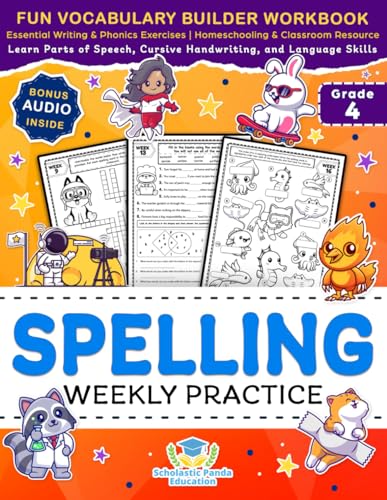
Spelling Weekly Practice for 4th Grade
Choose this workbook when you want one place for weekly spelling review, vocabulary work, and consistent independent practice.
A practical weekly schedule
| Day | Focus | What to do |
|---|---|---|
| Monday | Pattern preview | Introduce the weekly spelling pattern and sort words by what they have in common. |
| Tuesday | Guided written practice | Complete one short page or list and talk through one or two tricky words aloud. |
| Wednesday | Vocabulary and meaning | Define selected words, use them in sentences, or connect them to reading. |
| Thursday | Error review | Redo only the missed patterns instead of repeating everything. |
| Friday | Check and celebrate | Do a short review, note what improved, and choose the next target. |
This schedule works at home, in tutoring, or as a classroom support block because it removes the daily guesswork.
How long should practice take?
For most learners, 10 to 15 minutes is enough when the target is clear. If the learner is already doing classroom spelling work, the at-home goal should usually be reinforcement, not another full lesson. If your student needs more support, extend the week, not the daily session.
That distinction matters. Long sessions often create resistance, while shorter sessions make it easier to keep the pattern review going across the whole month.
How to know which words deserve extra attention
Extra practice should go to words that reveal a pattern problem, not just the words that were missed once. For example, if a child spells careless and hopeless incorrectly, the issue may be the suffix -less, not only those two words. That makes next-week planning easier because you know what to reteach.
Keep a short running list of repeated misses. After two or three weeks, you will see whether the real need is phonics review, vocabulary understanding, or slower written output.
When a workbook helps more than custom worksheets
Custom worksheets can be useful, but they often create too much work for the adult. If you are constantly deciding which words to pick, how many sentences to add, and what to revisit next, a workbook may save time and create better consistency.
Spelling Weekly Practice for 4th Grade: Who It Is For and How to Use It is the best next page if you want to see how one workbook can hold that weekly structure together without overcomplicating home or classroom review.
Signs your weekly plan is working
- The learner starts faster because the routine feels familiar.
- Misses cluster into fewer repeated patterns over time.
- Sentence writing improves because words are being used, not only memorized.
- Homework stress drops because the adult no longer has to invent each session.
Common mistakes to avoid
- Practicing too many unrelated word patterns in the same week.
- Using spelling tests as the only measure of progress.
- Skipping sentence work even though the learner can copy words accurately.
- Changing resources every time a page feels hard instead of narrowing the target.
Best next step
If you already know the learner needs a structured workbook, go to Best 4th Grade Spelling Workbook for Vocabulary and Phonics to compare what a good fit should include. If you want the actual workbook path, use the book spotlight page below.
FAQ
What should 4th graders practice in spelling each week?
Focus on one or two targets such as prefixes and suffixes, multisyllable words, vowel patterns, homophones, and sentence use instead of trying to cover every spelling skill at once.
How do I build spelling skills without long homework battles?
Keep the same weekly rhythm, limit sessions to about 10 to 15 minutes, and review only the missed patterns instead of reteaching the whole lesson every time.
Should spelling practice include vocabulary work?
Yes. Spelling improves more when students know what the words mean and use them in sentences, not only on a test.