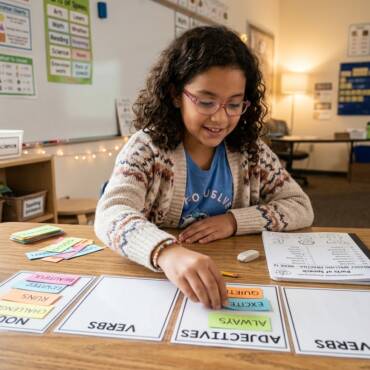
Spelling and Phonics
For first- and second-grade spelling practice, choose a small set of words using a pattern your child has already been taught. Ask the child to spell a few without looking, then use the errors to decide whether this week needs sound practice, a letter-pattern lesson, or more independent writing. Start with five to ten minutes and shorten the session when attention fades.
Looking for a reusable practice book? Check Spelling Weekly Practice for 1st 2nd Grade on Amazon. Compare the available preview with the learner checks below before choosing it.
Choose this week’s words from a short spelling check
Use the teacher’s current list or a few familiar words with a pattern you have taught. Say each word, use it in a sentence, and repeat it. Let the child write without seeing a model. This is a planning check, not a graded test or a diagnosis.
| What you notice | What to practice next | Example |
|---|---|---|
| Sounds are missing from a simple word. | Say the word slowly together and match each sound to its letter. | For map, identify /m/, /a/, /p/ and build the word with letters before writing it. |
| A taught two-letter sound is replaced with one letter. | Model the letter team and practice a few words containing it. | Compare sip and ship; explain that sh represents the first sound in ship. |
| The child copies correctly but cannot spell with the list covered. | Add a brief attempt from memory after looking closely at the word. | Inspect shop, cover it, write it, then compare the attempt with the model. |
| Words are correct alone but missed in sentences. | Use fewer words in a short dictated sentence. | After practicing ship, try “The ship is big.” Help with words outside the current target. |
For a first grader still learning basic sound-letter connections, begin with a few simple words. A second grader may be ready for a taught vowel pattern or word ending, but use the same check before increasing difficulty. If school assigns the list, ask the teacher which pattern to emphasize rather than replacing the assignment with an unrelated list.
A small weekly routine for beginning spellers
The following is a suggested home or small-group routine, not a description of pages in the workbook. Choose three to five practice words to start; adjust the number to the child and the school assignment.
- Monday: listen and build. Check a few words, choose one target, and model it. For a taught sh pattern, try ship, shop, and shut. Say the sounds as you build each word.
- Tuesday: compare. Sort familiar examples such as sip, sun, ship, and shop by their beginning sounds. Read each word and explain the spelling difference.
- Wednesday: cover and write. Let the child inspect a word, cover it, and write it from memory. Check immediately and explain any changed letters.
- Thursday: use a sentence. Dictate one short sentence containing a target word. Keep the spelling target separate from handwriting or punctuation corrections.
- Friday: check and choose. Try the words without a model. Keep uncertain words for another short lesson. If the pattern is secure, try one new example using that same taught pattern.
For a broader homework schedule, use our Monday-through-Friday spelling plan. Here, the priority is selecting a suitable starting pattern before assigning the week.
Correct the pattern, then try again
If the child writes sip for ship, say both words and point out the different first sounds. Write ship and underline sh. Explain that these two letters work together for the sound at the start of ship. Have the child cover the model and try again. Return to the word briefly the next day.
If writing itself is tiring, build the word with letter cards first, then ask for one written attempt. If the child repeatedly struggles to hear sounds or connect them to taught letters, share a few dated examples with the teacher and ask what to practice together next.
When a spelling workbook fits
Spelling Weekly Practice for 1st 2nd Grade is a Scholastic Panda Education title for ages 6–8, identified by ASIN 1953149324. It is a candidate when you want a book for regular spelling practice and its available sample matches the child’s current skills.
- Check the word difficulty: can the child read the sample words with modest help?
- Check the task: does the sample let you practice the pattern you are teaching?
- Check writing demands: can you assign a manageable portion without turning the session into handwriting endurance?
- Check the role: use the book alongside explanation and feedback when the child needs them.
The catalog confirms the book identity and stated age range. We have not verified the complete interior here, so this guide does not promise particular weekly lists, lesson counts, answer keys, or results. Check the current listing and any available preview for those details.
View the spelling workbook on Amazon, or browse Scholastic Panda Education books.
Sources and scope
Reading Rockets’ spelling practice guidance explains how spelling errors can inform instruction and how word sorts can highlight spelling patterns. The short routine and examples above are suggested activities from Scholastic Panda Education; they are not workbook excerpts or a tested intervention. Book identity was checked against the Amazon Creators catalog snapshot dated July 30, 2026.
Frequently asked questions
How many spelling words should a first grader practice?
Start with three to five words using a taught pattern as a manageable home-practice set. Adjust to the child’s responses and the teacher’s assignment; this is a starting suggestion, not a grade standard.
Should first and second graders use the same spelling list?
They can practice the same pattern if both need it. Choose the words and amount of writing from each child’s spelling check rather than assuming the grade label determines readiness.
What if my child can copy words but cannot spell them?
After inspecting a word, cover it and ask for one attempt from memory. Compare the attempt with the model and explain the missed sound or letter pattern before trying again.
Should sight words be part of spelling practice?
Include words the child is learning in class, and explain their regular and unusual spelling parts. Recognizing a word while reading does not by itself show that the child can spell it independently.
For that distinction, read sight words versus high-frequency words. Find more practice choices in our parent and teacher guides.