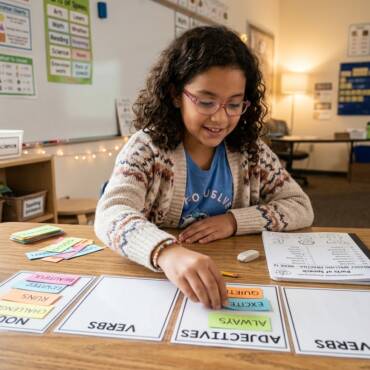
Spelling and Phonics
For 4th grade help with spelling and phonics, first identify the weekly problem: learning a word pattern, remembering assigned words, using vocabulary in sentences, or finishing practice independently. Then choose short, repeatable work that matches that gap. A workbook is most useful when the learner needs an organized weekly routine; it should support reading and teacher feedback, not replace them.

Key takeaways
- Choose a workbook that groups spelling into weekly practice, not disconnected pages.
- Fourth grade spelling practice works better when the same routine repeats three to five days per week.
- Look for vocabulary, phonics, and sentence-level practice together so kids use the words instead of only memorizing lists.
- Use the workbook as practical learning support, not as a replacement for teacher feedback or extra reading help.
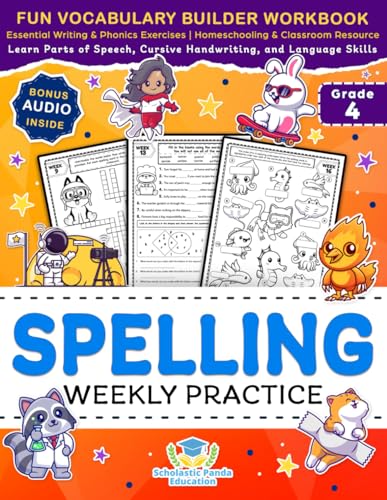
Spelling Weekly Practice for 4th Grade
Use this workbook when you want a clear weekly structure for word study, phonics review, and independent spelling practice.
Who this page helps
This page is for parents, teachers, tutors, and homeschoolers choosing a 4th grade spelling workbook for one of three common situations: school spelling homework is inconsistent, weekly word lists are not sticking, or a child needs calmer practice at home without adding another long assignment.
Most people searching this phrase are not looking for a theory lesson. They are trying to decide whether a workbook will actually help with weekly spelling words, vocabulary growth, phonics review, and written sentence practice. That decision is what this guide is built around.
What a strong 4th grade spelling workbook should include
Fourth grade is usually where simple memorization stops being enough. Many students now need support with syllable patterns, prefixes and suffixes, irregular plurals, contractions, commonly confused vowel teams, and academic vocabulary that shows up across reading and writing assignments.
A useful workbook should make those patterns visible. Instead of giving 100 unrelated words, it should organize practice so the learner can see why words belong together and then use them in context.
| Feature | Why it matters | What to avoid |
|---|---|---|
| Weekly layout | Keeps Monday-to-Friday practice predictable. | Pages that feel random every day. |
| Word-pattern practice | Helps kids notice prefixes, suffixes, syllables, and phonics rules. | Long word lists with no pattern explained. |
| Sentence application | Shows whether the learner can actually use the words. | Only copying or tracing with no writing. |
| Manageable page density | Makes independent practice realistic after school. | Overcrowded pages that create shutdown before learning starts. |
Choose the practice by the spelling or phonics gap
| Learner signal | Practice to choose | Adult check |
|---|---|---|
| Misses words with the same prefix or suffix | Sort and mark words by affix | Ask what the affix changes about the word |
| Spells a list correctly but misses the words in writing | Use two or three target words in original sentences | Check meaning as well as spelling |
| Guesses at unfamiliar multisyllable words | Divide words into spoken and written syllables | Compare the spelling in each syllable |
| Forgets assigned words between practice days | Use short review on three to five days | Repeat only missed patterns and words |
| Cannot explain a recurring spelling pattern | Pause independent workbook practice for modeling | Teach one example, then try a similar word together |
How to decide if the level is right
The right workbook should feel challenging but finishable. If every page turns into adult-led correction, the level or the routine is probably off. If the child races through without needing to think about patterns, spelling choices, or sentence use, the pages may be too easy.
A quick test is to look at one lesson and ask four questions:
- Can the learner finish the page in about 10 to 15 minutes?
- Does the page mix spelling review with vocabulary or sentence use?
- Is there a clear pattern, rule, or word family being practiced?
- Can you tell what to do tomorrow without inventing a new lesson?
If the answer is yes to those questions, the workbook is probably a better fit than a pile of printable worksheets.
When this workbook is a strong fit
Spelling Weekly Practice for 4th Grade is a strong fit when you want consistent weekly review and do not want to rebuild the routine from scratch every day. It works especially well when the learner benefits from short written tasks, vocabulary review, and enough repetition to notice patterns before moving on.
It is also a practical choice for homeschool planning and after-school review because the format makes it easier to keep the same schedule each week. Short repeated sessions give the adult more chances to notice recurring errors and adjust the next practice target.
Sample Monday-through-Friday plan
Use the workbook to support a simple weekly rhythm instead of opening it randomly.
- Monday: Preview the weekly words or pattern. Circle prefixes, suffixes, or vowel teams.
- Tuesday: Complete one short written practice page and say each word aloud before writing.
- Wednesday: Use selected words in original sentences so meaning and spelling stay connected.
- Thursday: Review missed items only. Do not repeat the entire lesson if just two patterns need attention.
- Friday: Give a short check or oral review, then move on without turning the session into a punishment.
If the learner struggles with stamina, split each day into two short rounds instead of one long block.
Workbook versus loose worksheets
Many families search for a 4th grade spelling workbook after trying free worksheets that never turn into a routine. Worksheets can help, but they often leave the adult doing all the planning: choosing the words, deciding the pattern, checking the answers, and figuring out what comes next.
A workbook is usually better when you want continuity. It reduces setup time, gives the learner a more stable structure, and makes it easier to notice whether spelling, vocabulary, or application is improving over a few weeks.
Common mistakes when choosing spelling practice
- Choosing the thickest workbook instead of the one a child will actually use consistently.
- Assuming more pages automatically means better practice.
- Separating spelling from reading and writing so words are memorized but never used.
- Timing every session when the real need is accuracy and pattern recognition.
What progress should look like
Useful spelling progress can show up in more accurate first attempts, better self-correction, and a learner who can explain why two words follow the same pattern. Keep a short record of recurring errors so the next practice session targets evidence from the learner’s own writing.
That is why a workbook with repeatable weekly structure matters. It helps adults notice small improvements instead of treating each lesson like a separate event.
Next steps if you are comparing options
If you are still deciding, compare this page with Building Spelling Skills Grade 4: What to Practice Weekly for the actual weekly targets and with Spelling Weekly Practice for 4th Grade: Who It Is For and How to Use It for a closer look at how the workbook fits home and classroom routines.
FAQ
What should a 4th grade spelling workbook cover?
Look for weekly word study with prefixes, suffixes, syllables, phonics review, vocabulary practice, and sentence-level application.
How often should 4th graders practice spelling?
Three to five short sessions per week usually works better than one long makeup session because the review stays fresh and easier to repeat.
Is a workbook better than printable worksheets?
A workbook is usually better when you want a repeatable weekly structure and less planning overhead. Worksheets help most when they are supporting a clear routine, not replacing one.